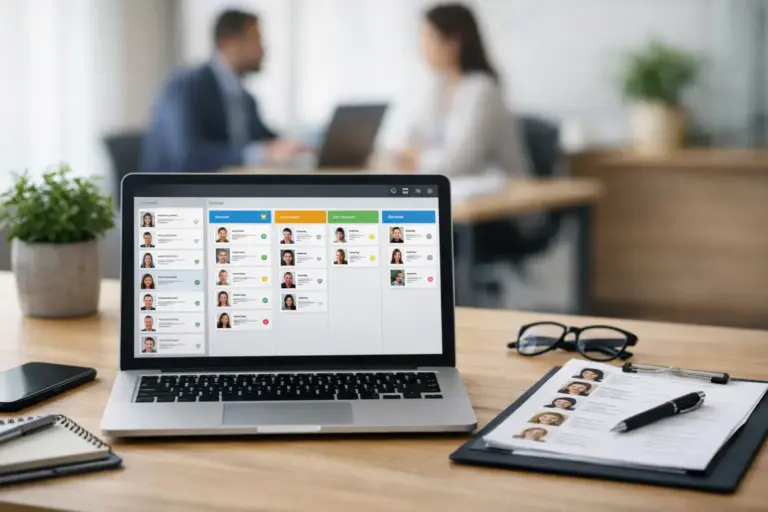


A polished job title and a familiar company name no longer guarantee an interview. Employers are under pressure to fill roles faster, find people who can perform from day one, and look beyond credentials that may not reflect real capability. That is why skills based hiring trends are changing how candidates compete and how UAE employers build teams.
For job seekers, this shift can be a major advantage. A candidate who learned data analysis through projects, customer service through hands-on work, or digital marketing through freelance campaigns can now compete more directly with applicants who have a traditional background. For employers, it creates a clearer path to identifying talent based on evidence, not assumptions.
What skills-based hiring actually means
Skills-based hiring puts demonstrated abilities at the center of the recruitment process. Instead of using a degree, job title, years of experience, or a previous employer as the main shortcut for quality, hiring teams assess whether a person has the technical, practical, and behavioral skills required for the role.
That does not mean experience and education have become irrelevant. A nursing license, engineering qualification, or legal credential still matters where regulation and safety demand it. The change is that employers are asking a more useful question alongside those requirements: can this person do the work we need done?
For a sales role, that may mean prospecting, account management, negotiation, and CRM fluency. For a project manager, it may mean stakeholder communication, budgeting, planning, and risk control. For a software developer, a portfolio, code sample, or technical assessment may say more than a generic list of responsibilities on a resume.
Why skills based hiring trends are accelerating
The UAE market moves quickly. Companies scaling teams in Dubai, Abu Dhabi, Sharjah, and remote locations cannot afford a lengthy hiring process built on weak signals. They need candidates who match the actual work, whether they are hiring for hospitality, technology, finance, real estate, engineering, or professional services.
Several forces are pushing skills-first recruitment forward.
First, job requirements are changing faster than traditional credentials. AI, cybersecurity, data tools, cloud platforms, automation, and digital customer experience have created roles that many professionals did not study for in college. People build these capabilities through certifications, short courses, side projects, contract work, and on-the-job learning.
Second, employers want wider access to talent. Over-relying on narrow degree requirements or exact job-title matches can screen out career changers, returning professionals, freelancers, and international applicants with the right ability. A skills-based approach expands the pool without lowering the bar.
Third, hiring technology makes skill matching more practical. Applicant tracking systems can identify relevant terms, recruiters can use structured scorecards, and AI tools can help map a job description to the capabilities that matter. Technology is useful only when the underlying criteria are clear. Automating a vague or biased process simply makes the same problem happen faster.
The shift from credentials to proof
The strongest candidates will not just claim skills. They will show proof.
A resume that says “excellent communication skills” is easy to overlook because almost every application says the same thing. A resume that says “led weekly client updates for a 12-person implementation team, improving project approval time by 20%” gives a recruiter evidence. The difference is specificity, context, and outcome.
Portfolios are becoming more valuable beyond creative work. Marketers can show campaign results, analysts can show dashboards or case studies, recruiters can outline hiring projects, and operations professionals can describe process improvements. Remove confidential details, but keep the problem, your actions, the tools you used, and the measurable result.
Assessments are also more common. Employers may ask candidates to complete a work sample, role-play a customer conversation, review a brief, solve a business problem, or complete a technical task. These methods can be more predictive than an unstructured interview, but only if they are job-related and reasonable. A short exercise that mirrors the role is fair. Asking candidates to complete hours of unpaid production work is not.
What employers need to change
A skills-first strategy starts before the job post goes live. Hiring managers should separate true must-have capabilities from preferences that have become habits. Requiring 10 years of experience for a role that needs strong Excel, reporting, and stakeholder management may eliminate capable professionals for no business reason.
A practical job description should define the outcomes of the role, then list the skills needed to deliver them. Rather than writing “must be a graduate from a top university,” an employer can state: “You will build monthly performance reports, identify revenue risks, and present recommendations to leadership. Required skills include advanced spreadsheet analysis, financial reporting, and clear business communication.”
Structured interviews matter too. Each candidate should be evaluated against the same core criteria, with questions tied to real situations. This improves consistency and helps reduce the influence of first impressions, accent bias, personal similarity, or a famous employer on a resume.
Employers should still use judgment. Some positions require industry knowledge, leadership maturity, security clearances, or local regulatory experience that cannot be replaced by a skills checklist. Skills-based hiring is not about pretending every candidate is interchangeable. It is about making requirements deliberate and defensible.
How job seekers can compete in a skills-first market
Candidates should treat their resume as a proof document, not a career biography. Start by reading the job description for repeated capabilities, tools, and outcomes. Then reflect those terms naturally in your headline, professional summary, work experience, and skills section when they genuinely match your background.
Do not create a long list of every platform you have ever touched. Prioritize skills that are relevant to the target role and support them with achievements. If you are pursuing a customer success position, highlight retention, onboarding, account health, CRM systems, escalations, and client outcomes. If you are targeting a data role, show SQL, reporting tools, data cleaning, visualization, and the decisions your analysis supported.
Career changers should connect transferable skills to the new role. A hospitality supervisor moving into operations may already have scheduling, vendor coordination, issue resolution, team leadership, quality control, and customer experience expertise. The task is to translate that experience into the employer’s language.
Fresh graduates can compete by using academic projects, internships, volunteer work, certifications, and personal projects as evidence. Experience is not limited to full-time employment. What matters is whether you can explain what you did, what you learned, and what result you produced.
Before applying, run a simple test: if a recruiter asked for proof of each core skill on your resume, could you provide a clear example? If the answer is no, strengthen the skill, remove the claim, or position it honestly as developing knowledge.
AI can make matching faster, not less human
AI is becoming part of skills-based hiring on both sides of the market. Employers can use it to identify relevant capabilities across large applicant pools, reduce repetitive screening work, and surface candidates whose job titles do not tell the full story. Candidates can use AI to tailor resumes, improve keyword alignment, prepare for skill-focused interviews, and identify gaps before they apply.
But speed should not replace accuracy. Candidates should never let an AI tool invent experience, inflate results, or add skills they cannot explain in an interview. Employers should not allow automated screening to become a black box that rejects qualified people without review. The best use of AI is practical: it organizes information, highlights fit, and gives people more time for better decisions.
Platforms such as Dr.Job UAE can support that faster process by helping candidates improve ATS-ready resumes, prepare for interviews, and target openings that fit their capabilities rather than sending the same application everywhere.
Build a career that is easy to verify
The long-term opportunity in skills-based hiring is bigger than one application. Professionals who document their results, keep learning, and communicate their value clearly become easier to hire, promote, and trust.
Choose one role you want next. Identify the five to seven skills employers repeatedly request, gather proof for each one, and close the gaps that hold you back. When your capabilities are visible, relevant, and credible, you give recruiters a stronger reason to move your application forward.