
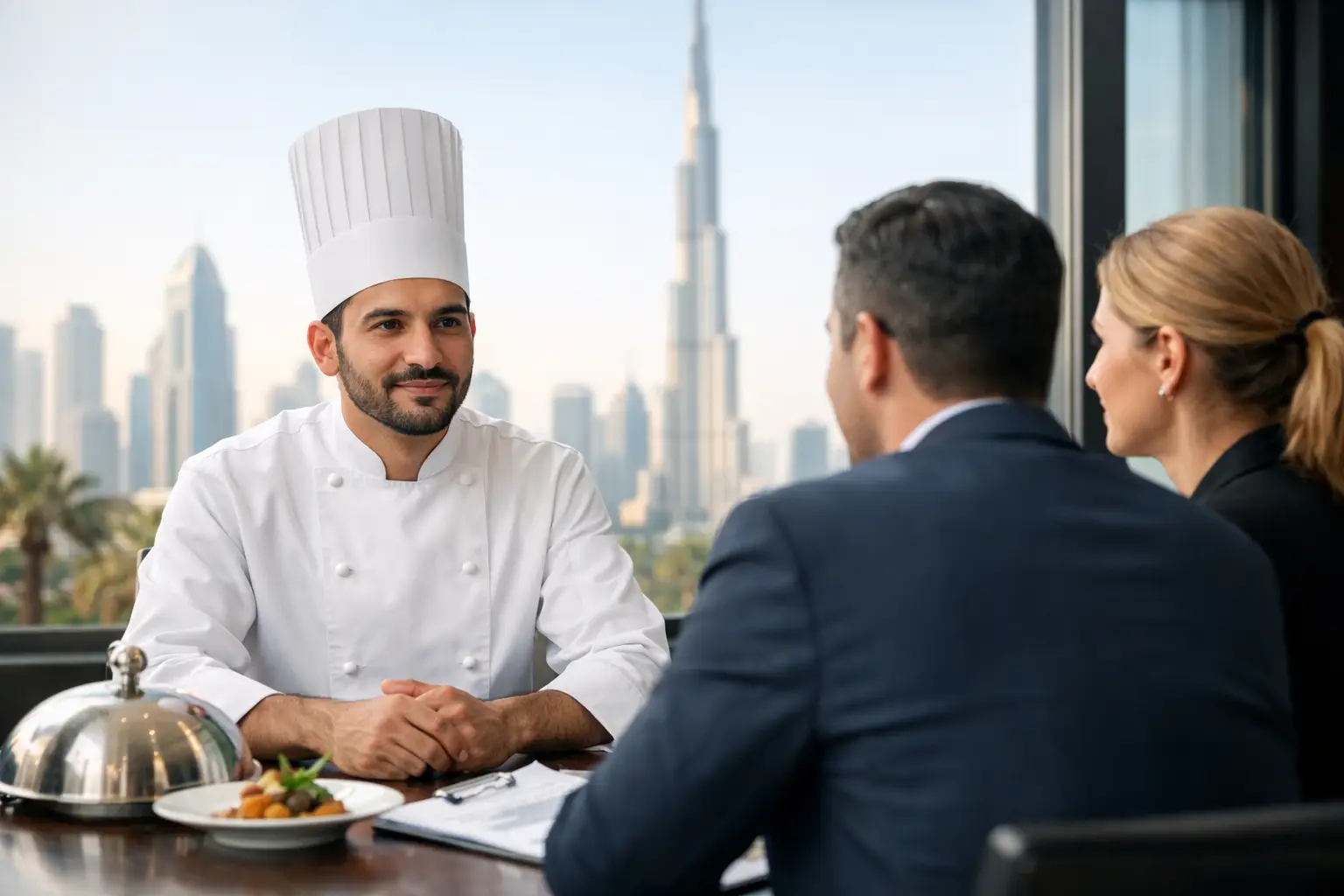

Dubai kitchens move fast. One service can tell an employer almost everything they need to know about you – your speed, your standards, your attitude, and whether you can hold quality under pressure. If you are targeting a chef job in Dubai, that reality matters more than polished buzzwords on a resume.
The good news is that Dubai remains one of the strongest hospitality markets in the region. Hotels, fine dining restaurants, casual concepts, cloud kitchens, catering companies, and private employers all need culinary talent. But demand alone does not guarantee interviews. Competition is serious, expectations are high, and hiring managers are usually scanning for proof that you can perform from day one.
Why a chef job in Dubai attracts so much competition
Dubai is a global hospitality hub, which changes the hiring equation. Employers are not just filling kitchen vacancies. They are building guest experiences for residents, tourists, business travelers, luxury clients, and event-driven crowds. That means they often look for chefs who can combine technical skill with consistency, teamwork, food safety discipline, and cultural adaptability.
For job seekers, the appeal is obvious. A chef job in Dubai can offer stronger earning potential than many home markets, exposure to international cuisines, and a faster career path inside branded hospitality groups. A line cook may grow into demi chef de partie, chef de partie, sous chef, and executive chef roles faster in a market that expands quickly and opens new concepts regularly.
Still, it depends on where you land. A luxury hotel kitchen offers prestige and structure, but the standards are intense and hierarchy matters. A standalone restaurant may give you more creative room, but job stability and systems can vary. Cloud kitchens can move fast and teach operational efficiency, yet the work may feel more production-focused than craft-driven.
What employers really look for in chef candidates
Many applicants assume experience years are enough. In reality, hiring managers in Dubai tend to look at the quality and relevance of that experience first.
If you are applying for a pastry role, broad hot kitchen experience may not help much unless your pastry background is clear. If you are applying for an Arabic, Indian, Continental, Asian, or bakery-focused role, employers want evidence that you have worked with that cuisine, volume level, and service style. A chef with three years in a busy hotel buffet may be more attractive for one role, while a chef with one year in a specialized fine dining kitchen may win another.
Your resume should make four things obvious fast: what cuisine you know, what section you ran, how many covers you handled, and what standards you worked under. HACCP awareness, food cost control, inventory support, menu prep discipline, and team coordination all matter. So does language. You do not need perfect English for every role, but clear communication is a real advantage in multicultural kitchens.
Attitude is another major filter. Dubai employers often favor candidates who show reliability, flexibility with shifts, respect for kitchen hierarchy, and calm under pressure. Talent gets attention. Professionalism gets offers.
Salary expectations for a chef job in Dubai
Salary depends heavily on role level, brand, cuisine, and employer type. A commis chef will usually sit in a very different pay range than a sous chef or executive chef. Live-in private chef roles may look attractive because of bundled housing or transport, while restaurant roles may rely more on service charge, overtime structure, or company-provided benefits.
It is also smart to look beyond the base salary. In Dubai hospitality, the full package can include accommodation, transportation, meals on duty, medical coverage, annual leave, airfare, visa sponsorship, and service charge. Two offers with similar monthly pay can feel very different once those details are clear.
There is a trade-off here. Some candidates chase the highest advertised number and end up in unstable environments with poor growth. Others take a slightly lower package with a respected hotel or expanding group and build stronger long-term value. The better move depends on your stage. If you need immediate income, that may shape your decision. If you are building a serious culinary career, brand quality and training can matter just as much.
Where the best chef opportunities usually are
Dubai is broad enough that not all kitchen jobs behave the same way. Luxury hotels tend to hire for structured brigade roles with clear reporting lines. These jobs usually suit candidates who are comfortable with systems, SOPs, audits, and high guest expectations.
Independent restaurants can be excellent if the concept is strong and management is stable. They may give chefs more direct exposure to menu development, opening teams, or hands-on leadership. But they can also be less predictable, especially if ownership changes direction quickly.
Catering and large-scale production kitchens reward chefs who can manage volume without losing control of quality. Private chef roles suit candidates who are discreet, adaptable, and comfortable with personalized meal planning. Cruise-style glamour is not the point here. Precision, trust, and flexibility are.
Cloud kitchens and delivery-first brands are also worth watching. These employers often prioritize output, consistency, packaging discipline, and speed. If you enjoy process-driven execution, they can be strong career moves.
How to stand out when applying
Most chef applications fail before the interview because the resume is too vague. Titles like “Chef” or “Kitchen Staff” say almost nothing. Employers want specifics.
State your exact level clearly – commis, demi chef de partie, chef de partie, sous chef, or head chef. Name the cuisines you have worked in. Mention whether you handled a la carte, buffet, banquets, room service, production, bakery, or pastry. Quantify where possible. If you supported 300 covers, helped reduce waste, trained junior staff, or maintained food safety standards during peak service, say so directly.
The second mistake is applying too broadly without alignment. A candidate who sends the same generic resume to every opening usually gets ignored. Match your experience to the role. If the job is for a specialty grill chef, your application should highlight grilling, meat handling, portion control, and station ownership. If the role is in pastry, front-load pastry achievements instead of burying them.
This is where speed and precision matter. Platforms built for faster hiring, including Dr.Job UAE, can help candidates move quicker by pairing job discovery with resume optimization and application support. That matters in hospitality because employers often fill urgent vacancies fast.
Interview questions you should expect
Kitchen interviews in Dubai are often practical, even when they begin formally. You may be asked where you worked, what section you handled, what cuisine you know best, and how you manage pressure during busy service. But do not be surprised if the interviewer quickly moves into operational detail.
They may ask how you store proteins, how you prevent cross-contamination, how you manage mise en place, or how you react when a team member falls behind during service. Senior candidates may face questions about food cost, waste control, ordering, vendor coordination, scheduling, and staff training.
Some employers will also ask about visa status, joining availability, and whether you are inside or outside the UAE. That is not a minor detail. In urgent hiring cycles, immediate availability can raise your chances.
A trial shift is common in some kitchens. Treat it seriously. Technical skill matters, but so do your hygiene habits, station setup, communication, and responsiveness to feedback. Employers are watching how you work, not just what you cook.
Common mistakes that slow candidates down
One of the biggest mistakes is presenting yourself as more senior than your actual experience supports. Kitchen leaders can spot inflated claims quickly. If you were assisting, say you were assisting. If you owned a section, show how. Accuracy builds trust.
Another mistake is ignoring presentation. You are applying for a chef job in Dubai, where standards and professionalism carry weight. A sloppy resume, missing employment dates, or unclear job titles can cost you interviews before anyone tests your skills.
Candidates also underestimate mobility. Being open to different employer types, locations within the city, and shift patterns can increase your options. Flexibility does not mean accepting poor conditions. It means understanding that the strongest opportunity may not always look like the one you imagined.
Is Dubai the right move for your chef career?
For many culinary professionals, yes – but not automatically. Dubai rewards chefs who are fast, resilient, organized, and serious about standards. If you want a market where hospitality is competitive, guest expectations are high, and growth can happen quickly, it is a strong place to build.
If you are expecting easy hiring just because the city has many restaurants, you may be disappointed. The market moves, but it also filters hard. The chefs who win are usually the ones who understand the role, tailor the application, and show clear proof that they can deliver under pressure.
That is the real edge. Do not apply like everyone else. Apply like a chef who already understands how Dubai kitchens hire.