
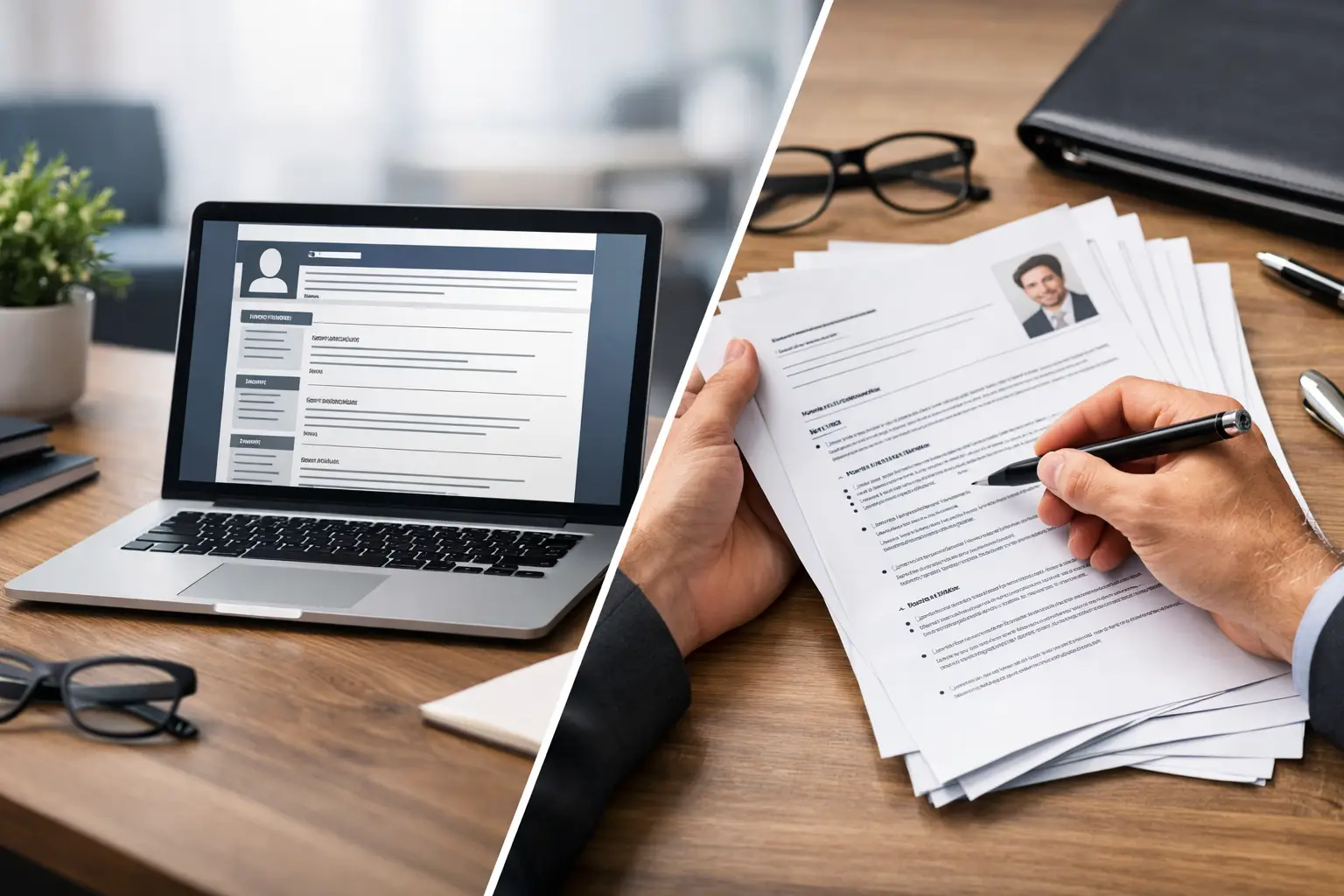

A strong application can be the difference between being filtered out in seconds and landing on a recruiter’s shortlist. The resume builder vs cv writer decision is not about choosing the most impressive-sounding option. It is about choosing the fastest, smartest way to present your experience for the role you want.
For job seekers targeting Dubai, Abu Dhabi, or remote opportunities, the right choice depends on your career stage, timeline, budget, and how much strategic support your application needs. A resume builder gives you control and speed. A CV writer gives you human expertise and deeper customization. Both can work. The better option is the one that helps you apply with confidence while keeping up with a competitive hiring market.
Resume Builder vs CV Writer: The Core Difference
A resume builder is a digital tool that helps you create a professional resume through templates, prompts, formatting controls, and often AI-powered suggestions. You enter your experience, select a layout, tailor sections to a target role, and export a polished document. Modern builders may also help identify skills, improve bullet points, and optimize wording for applicant tracking systems, or ATS.
A CV writer is a human professional who interviews you, reviews your background, and writes or rewrites your document on your behalf. The service may include career strategy, LinkedIn profile writing, cover letters, and multiple rounds of revisions. You are paying for interpretation as much as writing: someone who can spot the strongest story in a complex career history.
The terminology can vary by market. In the United States, a resume is generally a concise document for most jobs, while a CV is more detailed and often used in academia, research, medicine, or senior specialist roles. In many UAE job applications, candidates and employers use “CV” to mean the standard job application document. What matters most is not the label. It is whether your document is relevant, readable, and tailored to the vacancy.
When a Resume Builder Is the Smarter Move
A resume builder is built for momentum. If you are applying to several roles this week, waiting for a writer to complete a draft can slow down an opportunity that is already moving fast. With a quality AI resume builder, you can produce a polished first version quickly, then create targeted versions for different job titles.
That flexibility matters when the roles are similar but not identical. A sales professional may need one version that emphasizes enterprise account growth and another that highlights retail leadership. An engineer may apply to project engineering, site engineering, and technical coordination roles, each with different keywords and priorities. One generic document rarely performs as well as a tailored one.
A builder is especially useful for fresh graduates, early-career applicants, freelancers, and professionals with a clear, straightforward work history. If you know what you have achieved but need help turning it into strong language, AI suggestions can move you from vague statements like “responsible for customer service” to evidence-based bullets such as “Resolved 40+ customer inquiries daily while maintaining high satisfaction ratings.”
Cost is another advantage. Professional writing services can be valuable, but they are usually more expensive than a builder and may charge extra for revisions or supporting documents. A builder lets you refine your resume whenever your skills, achievements, or target roles change.
The strongest use case is simple: you need a clean, ATS-friendly resume now, and you want the ability to improve it every time you apply.
Where resume builders can fall short
A tool cannot fully understand your career unless you give it useful information. If you enter generic job descriptions, you will receive generic results. AI can improve phrasing, but it should not invent promotions, metrics, qualifications, or software expertise you do not have.
Resume builders can also encourage people to focus too much on design. A stylish template may look good, but complicated columns, graphics, text boxes, and icons can confuse some screening systems. For most corporate roles, a clear single-column structure, standard section headings, and readable fonts are safer choices.
Use the builder as a performance tool, not a document vending machine. Add real results, review every line, and tailor the resume to the job description before you submit.
When a CV Writer Is Worth the Investment
A CV writer can deliver more value when your story is difficult to explain on paper. Perhaps you are changing industries, returning after a career break, moving from military service into civilian work, or applying for a senior leadership role. In these cases, the challenge is not formatting. It is positioning.
A skilled writer can identify transferable achievements, shape a persuasive professional summary, and create a narrative that connects your past experience to your next move. For example, a hospitality manager moving into operations may have experience in staffing, budgeting, vendor coordination, compliance, and customer retention. A writer can frame those achievements in language that makes sense to an operations recruiter.
Senior professionals may also benefit from a writer’s perspective. At director, VP, and executive level, hiring teams expect more than a list of responsibilities. They want evidence of scope: team size, budget ownership, market expansion, cost reduction, revenue impact, transformation projects, and leadership outcomes. A good writer knows how to draw those details out through the right questions.
A CV writer may be the better choice if you have received few interview invitations despite applying to well-matched roles. Your experience may be strong, but your current document could be unclear, overly dense, outdated, or focused on duties rather than outcomes. An outside expert can spot problems you have become too familiar to notice.
What to watch for with CV writing services
Human support does not automatically mean a better resume. Some services rely on generic templates, overused corporate language, or claims that sound impressive but cannot be defended in an interview. A resume that says you “spearheaded strategic synergies” is not stronger than one that clearly states what you improved and how.
Before choosing a writer, understand the process. Will they speak with you directly? Do they have experience with your industry and seniority level? How many revisions are included? Will you receive an editable version? Most importantly, will the final document be ATS-compatible and easy to tailor later?
A writer can create a powerful foundation, but you still need to own your story. Read the final draft closely. If you would not say a phrase in an interview, rewrite it.
Speed, Personalization, and ATS: How to Choose
The best choice comes down to the constraint you cannot afford to ignore.
Choose a resume builder when speed and volume matter. It is ideal when you want to apply across several relevant roles, test different positioning, and keep your materials updated without paying for every edit. Tools such as Dr.Job UAE’s AI Resume Builder can help candidates create a stronger starting point, then move quickly into matching jobs and applications.
Choose a CV writer when strategy matters more than speed. If your work history is complex, your target is highly competitive, or you need a major career repositioning, personalized human guidance can justify the cost.
For many job seekers, the strongest approach is not strictly one or the other. Start with a builder to organize your experience and create role-specific versions. Then consider a writer or career professional if you need a strategic review for a career pivot, executive application, or persistent lack of interview responses.
Make Either Option Work Harder
Whether you use software or a writer, your document needs the same essentials. Match your headline to the role you are seeking. Mirror relevant language from the job description without copying it blindly. Put measurable achievements ahead of routine tasks. Include the technical skills, certifications, languages, and tools that the employer actually values.
Keep your resume focused. A recruiter should quickly understand your current level, the problems you solve, and the results you deliver. For most professionals, one or two pages is enough. Longer documents can work for research, academic, medical, or deeply technical backgrounds, but length should earn its place.
Finally, treat every application as a campaign, not a one-time upload. Track which resume version you used, which roles received responses, and which keywords appeared repeatedly. That feedback will show you what to improve far faster than guessing.
Your next opportunity may not wait for a perfect document. Build a credible, targeted version, submit it while the role is active, and keep improving with every application and interview.